Projects
Changes Foundation (Spoke 2 – PE5) – 2023-2026
Dialects in Italy (Manzini – Savoia)
Project for the digitisation of field interview transcripts that formed the reference documentation for Manzini and Savoia (2005). This work is part of the “Cultural Heritage Active Innovation for Sustainable Society” programme, funded by the PNRR promoted by the Ministry of University and Research and the European Union.
Prin 2017 – Progetti di Ricerca di Rilevante Interesse Nazionale
Models of language variation and change: new evidence from language contact
Principal Investigator: Maria Rita Manzini, Università di Firenze
Associated Investigators:
Cristina Guardiano, Università degli Studi di Modena e Reggio Emilia
Paola Crisma, Università degli Studi di Trieste
Alessandra Tomaselli, Università degli Studi di Verona
Linguistic variation and change are interesting to the extent that, no less than language universals, they appear to be not accidental to language, but rather written into its basic design. Specifically, conceptual and inferential components are presumably not subject to variation/change – nor are the computational components (syntactic operations, phonological operations). Rather, variation arises when these components interact (notably at externalization), posing questions of functional optimization to the system. “Why are there so many languages? The reason might be that the problem of externalization can be solved in many different and independent ways”. “Diversity of language results from the fact that the principles do not determine the answers to all questions about language, but leave some questions as open parameters” (Berwick & Chomsky 2015).
Within the framework just defined, our general research objective in meshing contact data with parametric models is to detect, describe, measure and explain language diversity, using the external impulses acting on it as a tool to get to the core of the internal structures that determine it (i.e. the speakers’ grammatical competence). Our aim is threefold:
(i) collecting and describing syntactic data in several domains of language microvariation and contact in which the research team has documented expertise;
(ii) carrying out a formal syntactic analysis of the data, with emphasis on contact as a magnifying lens on (micro)variation and change;
(iii) developing and comparing models of syntactic parameters in the light of the formally analyzed data.
We are interested in contact phenomena not in themselves but in so far as they are one of the external factors that may act as catalyzers or accelerators for variation and change. By contact, we mean any situation in which two different languages are spoken by the same community, hence in condition of bilingualism. Specifically, we are interested in situations of protracted (centuries-long) contact, often historically documented, which allow us to observe internal diversification of the languages involved both on the temporal axis (change) and on the spatial axis (dialectal variation). The empirical foundation of the project rests on several domains of evidence, which are robustly represented in the publications of the research team. Each of these domains is noted by the rich internal microvariation. They will form the object of further data gathering by fieldwork or by quantitative corpus analysis. We mention a representative sample:
- German(ic) varieties in contact with Romance: Cimbrian, Mòcheno, Saurano, Sappadino, Timavese; see also the participation of members of the Verona unit to AthEME – Advancing the European Multilingual Experience
- (PI, L. Cheng, Leiden, EU 7th FP);
- Greek and Albanian varieties in contact with Romance, specifically Italo-Albanian (Arbëresh) and Italiot Greek (Southern Calabria: Bovesia; Salento: Grecìa Salentina)
- West Germanic/North Germanic/Romance (possibly Celtic) contact in the passage from Old to Middle English.
The formal analysis aims at investigating domains of syntax and of the syntax/externalization interface on which the team has extensive publication record, specifically case/agreement and word order phenomena, both in the noun phrase and in the sentence. This is a paramount requirement for the third and crucial stage of our research centering on parametric models – to be evaluated not with respect to the raw data, but with respect to their formal analyses. Once again, we will take our bearings from previous work of the units. We will collaborate with the ERC AdG project LanGeLin – Meeting Darwin’s last challenge (PI, G. Longobardi, York) of which Guardiano is Permanent Project Advisor. The implementation on the microvariation level of their Parametric Comparison Method (PCM), namely a structured system of a few dozen parameters for the nominal domain, has shown that several refinements are required (Guardiano et al. 2016). The approach to microvariation connected to the Lexical Parametrization Hypothesis (Manzini & Wexler 1987, Chomsky 1995, Manzini & Savoia 2011), ties variation to the externalization space defined by the lexicon in order to yield the required detail. Our first goal is a comparison and unification of these approaches. The ultimate goal we work towards is a more ambitious global reassessment of current parametric models.
In proposing to carry out this research, we are highly aware that the empirical domains we investigate are fragile or outright endangered. Though language policy is not our focus, the project includes a social impact component, integrating a language education package – in recognition of the crucial role it plays in strengthening the use of a minority language in contact with a standard language.
Celebrations
Carlo Cecchetto, Donati Caterina. Relabeling participial constructions. Ludovico Franco and Paolo Lorusso. Linguistic Variation: Structure and Interpretation, A Festschrift in Honour of M. Rita Manzini in occasion of her 60th birthday. Mouton De Gruyter, pp.149-162, 2020, 978-1-5015-0520-1.
Participial relatives show a considerable degree of morphosyntactic variation crosslinguistically, with different structures and forms corresponding to different syntactic derivations (Doron & Reintges 2007). The most well-known type is that of past participial relatives in Romance, which display typical unaccusative/passive diagnostics in only allowing object relatives without an external argument (Burzio 1986). In Italian, for example, past participle reduced relatives are acceptable with passives (1) and unaccusatives (2) but unacceptable with active (3) and unergative verbs (4).
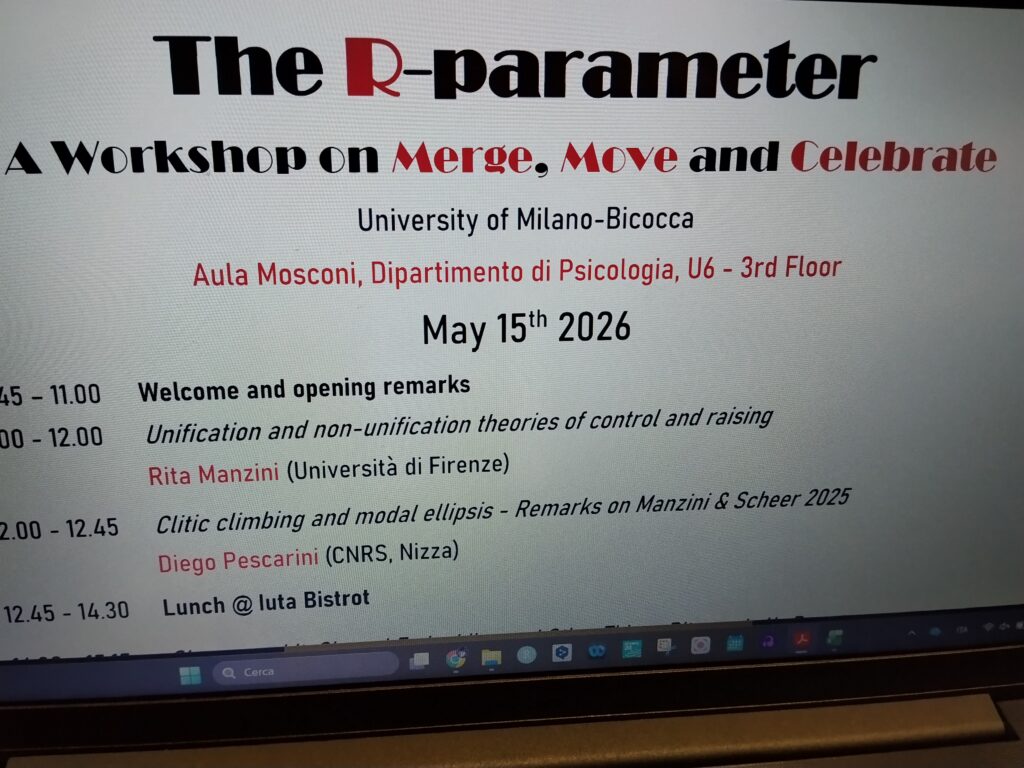
The R-parameter: A Workshop on Merge, Move and Celebrate.
University of Milano-Bicocca. Aula Mosconi, Dipartimento di Psicologia, U6 – 3rd Floor – May 15th 2026
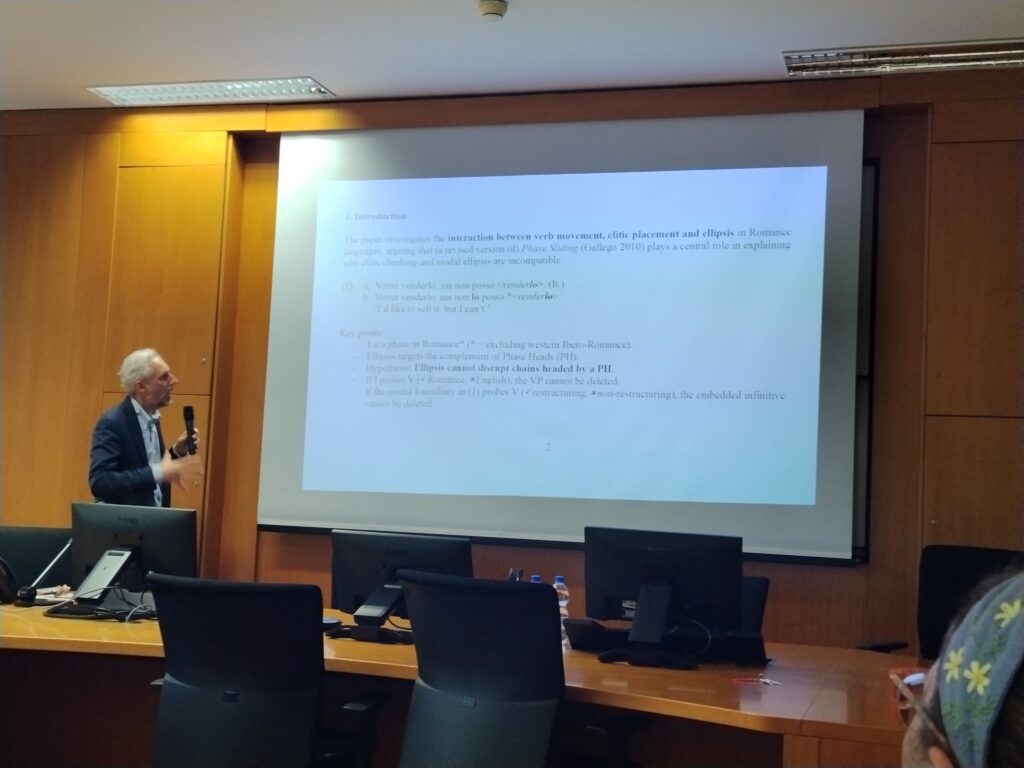 Diego Pescarini
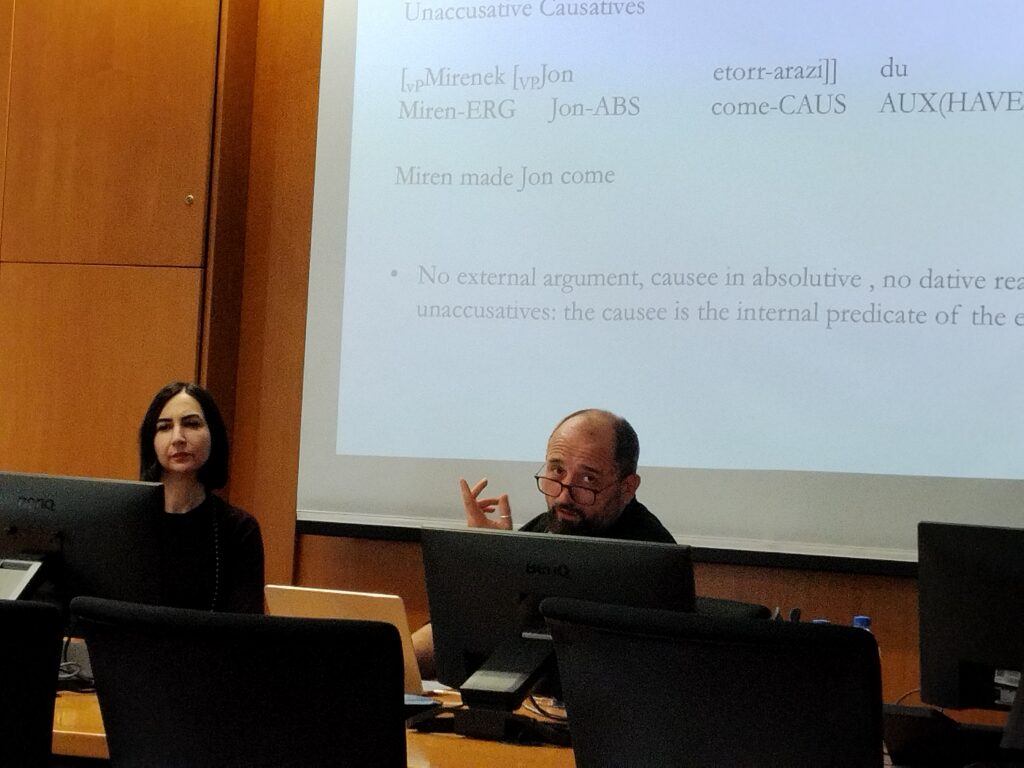 Linda Bada, Paolo Lo Russo
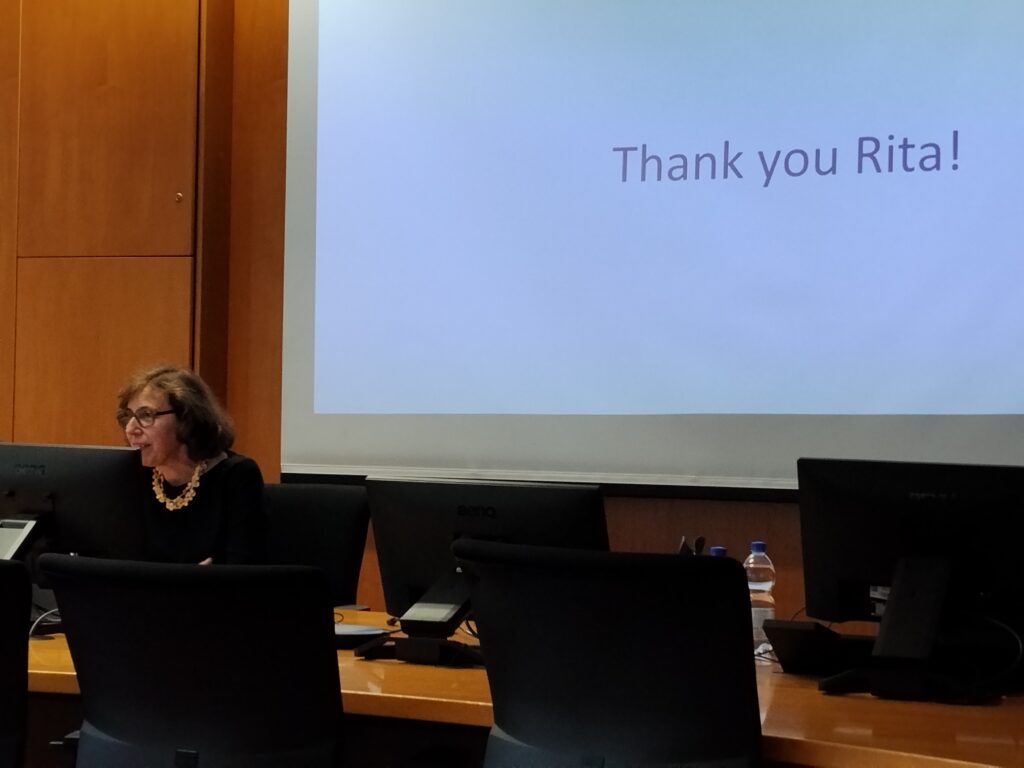 Anna Roussou
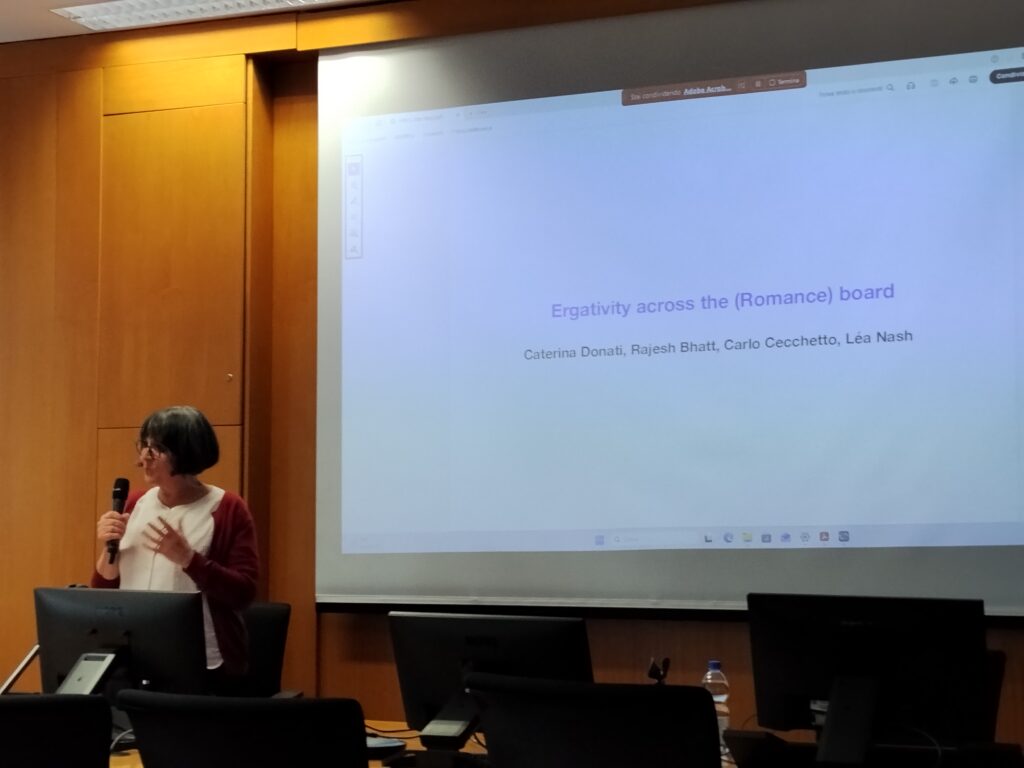 Caterina Donati
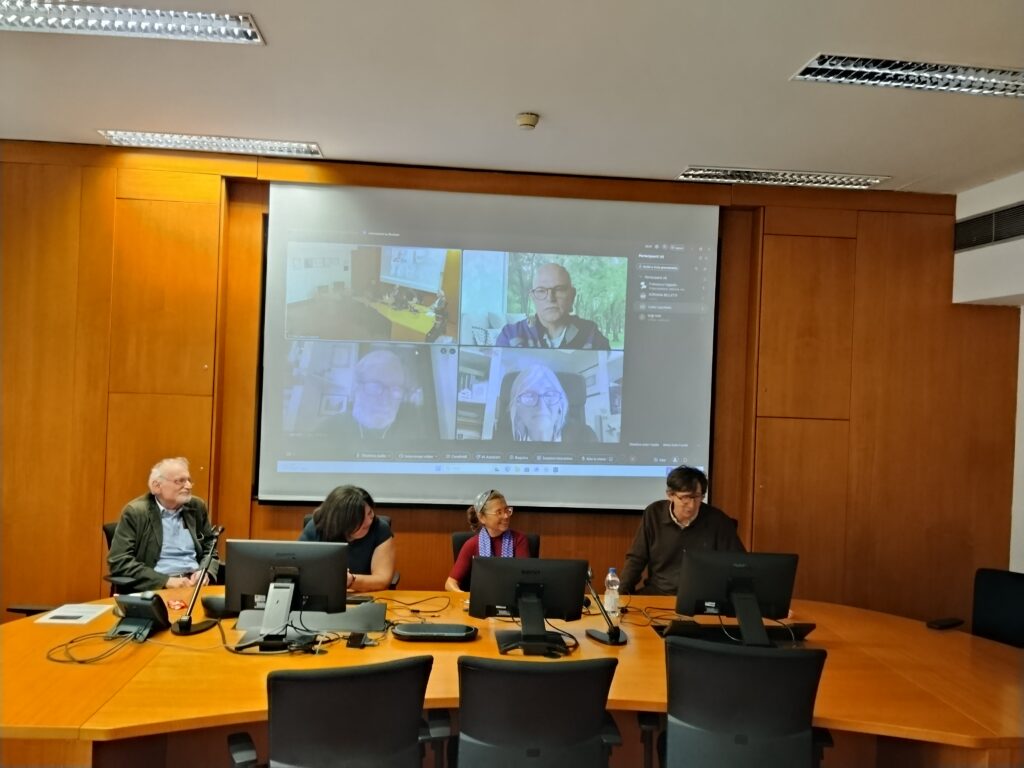 Giorgio Graffi, Rita Manzini, Maria Teresa Guasti, Gennaro Chierchia
(in video: Carlo Ceccchetto, Luigi Rizzi, Adriana Belletti)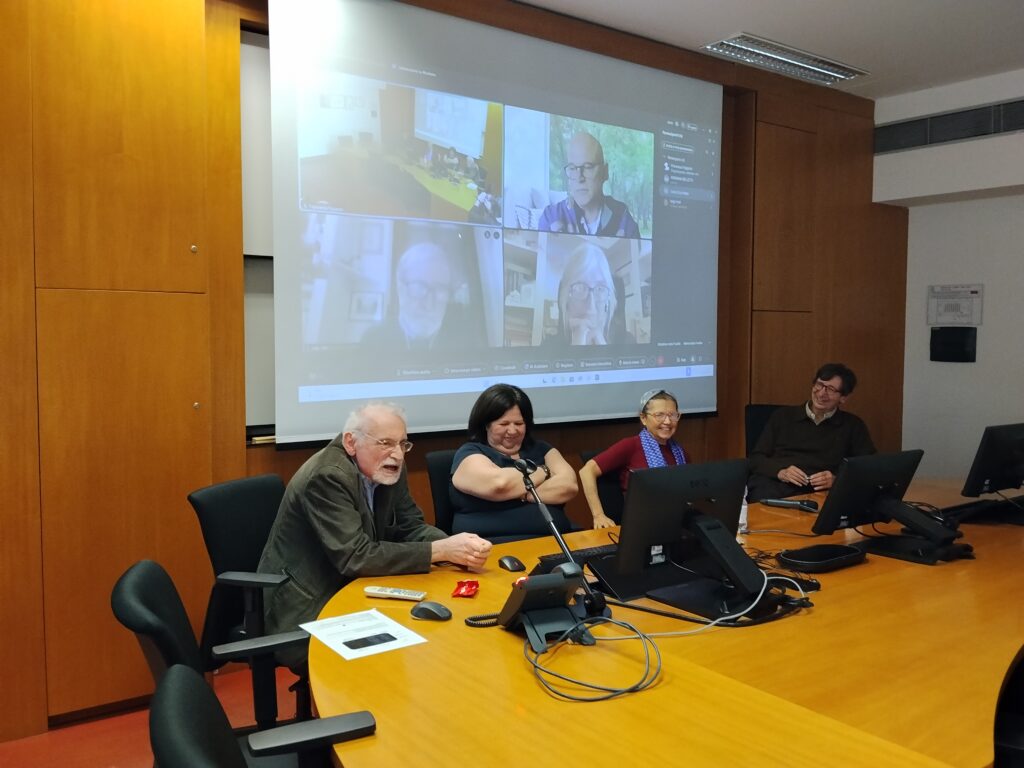 Giorgio Graffi, Rita Manzini, Maria Teresa Guasti, Gennaro Chierchia
(in video: Carlo Ceccchetto, Luigi Rizzi, Adriana Belletti)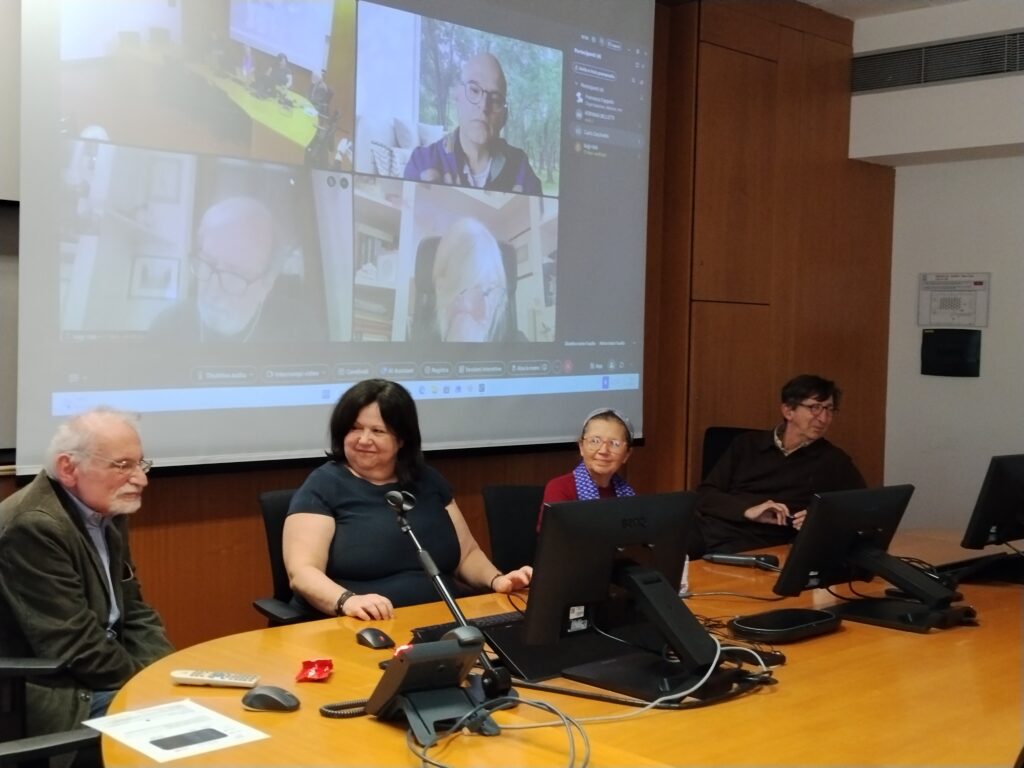 Giorgio Graffi, Rita Manzini, Maria Teresa Guasti, Gennaro Chierchia
(in video: Carlo Ceccchetto, Luigi Rizzi, Adriana Belletti)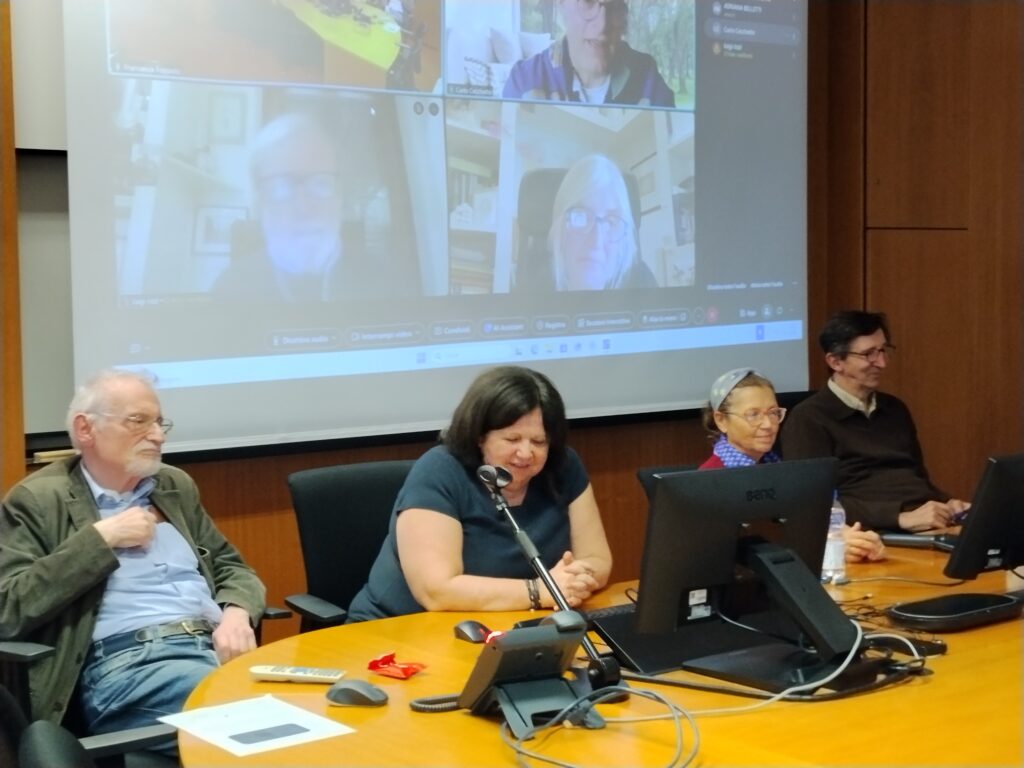 Giorgio Graffi, Rita Manzini, Maria Teresa Guasti, Gennaro Chierchia
(in video: Carlo Ceccchetto, Luigi Rizzi, Adriana Belletti)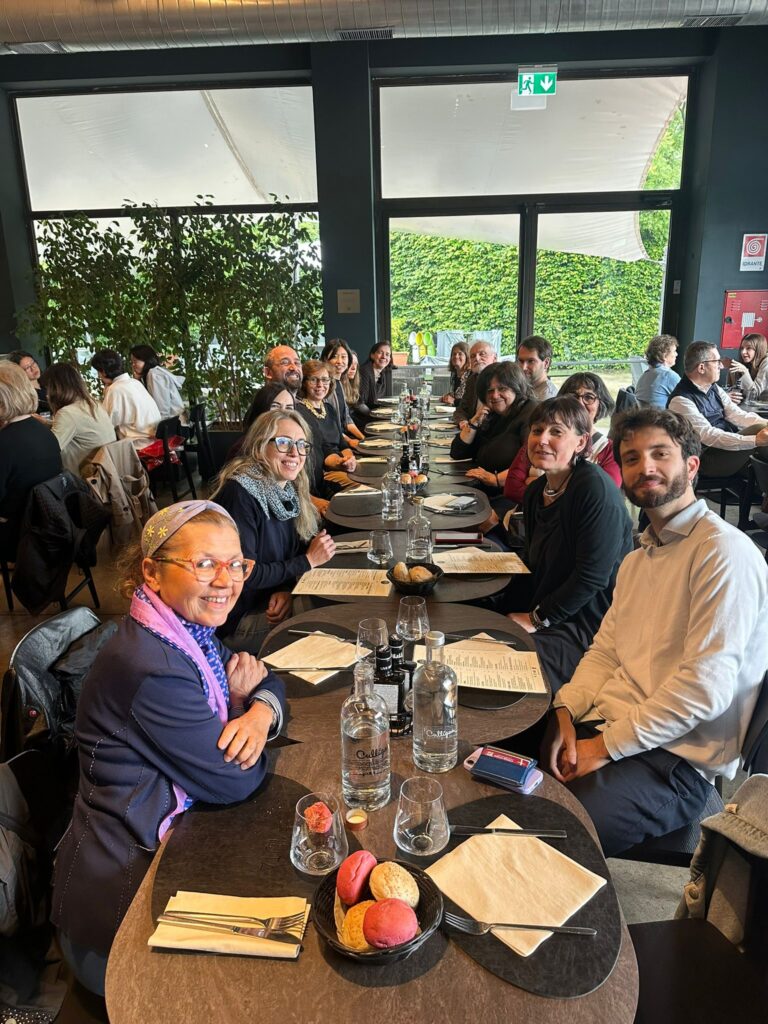 Francesca Foppolo